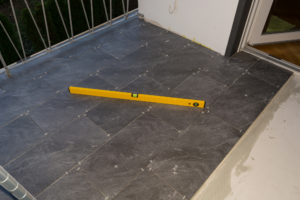
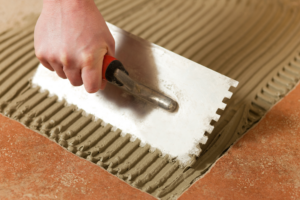
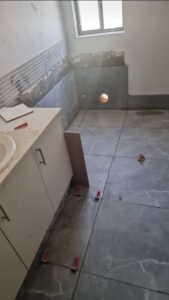
Have you ever wondered what the secret is behind a flawless tile installation? It’s not just about choosing the right tiles or having a skilled tiler; it’s about laying a solid foundation. And that foundation is called screeding. In this blog post, we’ll delve into the world of screeding, exploring what it is, why it’s crucial, and how it can make or break your tiling project.
What is Screeding?
Screeding is the process of creating a smooth, level surface on a floor or wall before tiles are installed. It involves applying a semi-liquid mixture, typically made of cement and sand, onto the substrate (the existing floor or wall). This mixture is then levelled using a straight edge tool, creating a uniform base for the tiles to adhere to.
Why is Screeding Important?
Screeding plays a pivotal role in achieving a successful tile installation for several reasons:
- Level Surface: A level surface ensures that tiles are laid evenly, preventing unevenness, lippage (where one tile edge is higher than another), and potential tripping hazards.
- Proper Drainage: In wet areas like bathrooms and laundries, screeding allows for the correct slope to be created, ensuring water drains away effectively and prevents pooling.
- Structural Integrity: Screeding adds strength and stability to the substrate, reducing the risk of cracking or movement in the tiles over time.
- Adhesive Bonding: A smooth, level surface created by screeding provides the ideal base for tile adhesive to bond properly, ensuring a strong and lasting installation.
Types of Screeds
There are several types of screeds available, each with its own advantages and suitable applications:
- Bonded Screed: This type of screed is directly applied to the substrate, creating a strong bond between the two. It is ideal for areas with heavy foot traffic or where a thin screed is required.
- Unbonded Screed: This type of screed is laid over a separating layer, such as polythene sheeting. It is suitable for situations where the substrate is prone to movement or where sound insulation is required.
- Floating Screed: This type of screed incorporates insulation and is laid over a separating layer. It offers excellent thermal and sound insulation properties and is commonly used in underfloor heating systems.
- Self-levelling Screed: This type of screed is a flowable compound that self-levels to create a perfectly smooth surface. It is often used for final levelling or where a very thin screed is needed.
The Screeding Process
The screeding process typically involves the following steps:
- Preparation: The substrate is thoroughly cleaned and any cracks or holes are repaired. A primer may be applied to enhance adhesion.
- Screed Mixing: The screed mixture is prepared according to the manufacturer’s instructions.
- Screed Application: The screed is poured onto the substrate and levelled using a straight edge tool.
- Screed Curing: The screed is allowed to dry and cure according to the manufacturer’s recommendations. This may take several days or weeks.
- Tile Installation: Once the screed is fully cured, the tiles can be installed using a suitable adhesive.
Common Screeding Mistakes to Avoid
To ensure a successful screeding project, it’s important to avoid these common mistakes:
- Insufficient Preparation: Failing to properly prepare the substrate can lead to poor adhesion and screed failure.
- Incorrect Mixing: Inaccurate measurement or mixing of the screed components can result in a weak or uneven screed.
- Inadequate Levelling: Improper levelling techniques can lead to an uneven surface, which can cause problems with tile installation.
- Insufficient Curing: Rushing the curing process can compromise the screed’s strength and durability.
- Using the Wrong Screed: Choosing the wrong type of screed for the application can lead to various issues, such as cracking or poor performance.
Conclusion
Screeding is a fundamental step in achieving a perfect tile installation. It provides a solid, level foundation that ensures tiles are laid evenly, drains function properly, and the installation lasts for years to come. By understanding the importance of screeding, choosing the right type of screed, and following the correct process, you can lay the groundwork for a flawless tiling project that enhances the beauty and functionality of your home.
If you’re planning a tiling project and want to ensure a perfect result, don’t overlook the importance of screeding. Contact Mandurah Tiling Solutions today for expert advice and professional screeding services. We have the experience and expertise to create a flawless foundation for your tiles, ensuring a beautiful and long-lasting finish.